Consumer prices rose 3.7% from a year earlier in September, and producer prices jumped 6.3%, according to CNBC. The artificial intelligence boom is now part of that inflation problem. If the Fed has to raise rates to fix it, small businesses and families may foot the bill instead of the AI giants driving the spending.
That is the picture in a new Reuters report from Cleveland, filed by Howard Schneider. Fed officials increasingly acknowledge that AI investment is helping push prices higher. In short, AI boom inflation has moved from a side worry to a central one.

Why AI Boom Inflation Is a Problem for the Fed
Building data centers and buying chips is a staggering amount of spending. Chair Kevin Warsh has described it as a “massive investment surge”. He said AI is boosting spending now, ahead of the longer-term productivity gains it promises.

That timing is the catch. Demand shows up first, and the payoff comes later. In the meantime, the AI spending surge keeps prices under pressure.
The Fed already raised rates in September for the first time since 2023, after the Iran war stoked inflation.
The Medicine for AI-Driven Inflation Has Uneven Side Effects
Rate hikes are meant to cool the whole economy, and that includes your borrowing costs. But the biggest AI players may barely feel them, which makes AI-driven inflation tricky to treat.
Reuters names Amazon, Apple and Anthropic as marquee names seen as immune to higher rates. They have cash and deep pockets, so a pricier loan will not slow their plans.
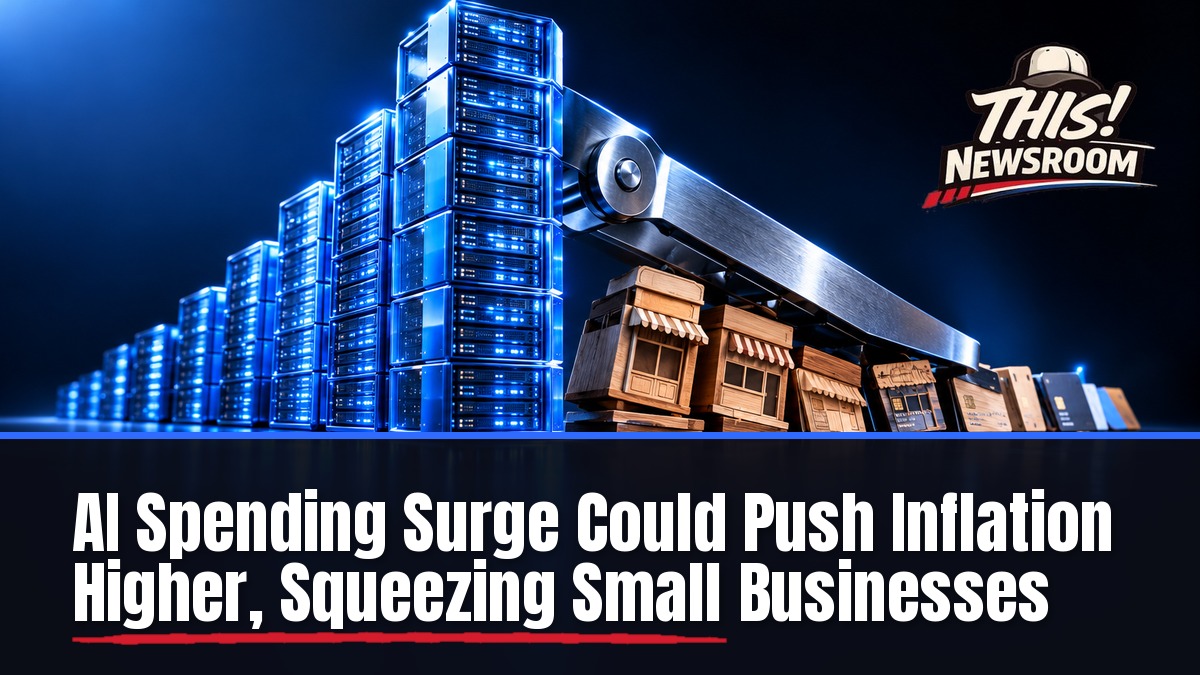
Others have no such cushion. ADP Chief Economist Nela Richardson told Reuters that small businesses needing bank loans are exposed. So are consumers who fund payments with debt and credit cards. Picture a bakery with a $200,000 variable-rate loan. Every extra point of interest adds roughly $2,000 a year to its costs, before flour or rent budge. The stock market could take a hit too, as the recent AI stock selloff showed.
So who is the medicine really aimed at? The Fed wants to slow price growth, and it may end up treating the wrong patients.
What Fed Officials Say About Artificial Intelligence Inflation
Cleveland Fed President Beth Hammack told Reuters that higher rates could cool the economy “at the margins.” She pointed to tempered stock gains and slower activity outside the AI boom as ways that could happen. Her view of artificial intelligence inflation is cautious, not alarmed.
“I like growth…I’m not trying to stop growth. I’m just trying to pull it back a little bit so that it’s moving at a pace that doesn’t put too much pricing pressure out there.”
Officials say more hikes are likely necessary, but they are still debating the pace and how far to go.
What the AI Investment Boom Means for the Next Fed Move
Markets have swung wildly on whether a hike is coming. Odds of an October hike jumped to 50% after the inflation report, then fell to 28% by Thursday afternoon, Axios reported. Stocks slid last week after the hot reading raised expectations of higher rates.
The AI investment boom is not slowing on its own, and the next round of Big Tech earnings will test it. If AI spending keeps running hot, the Fed may hit the brakes on everyone else to cool it down.