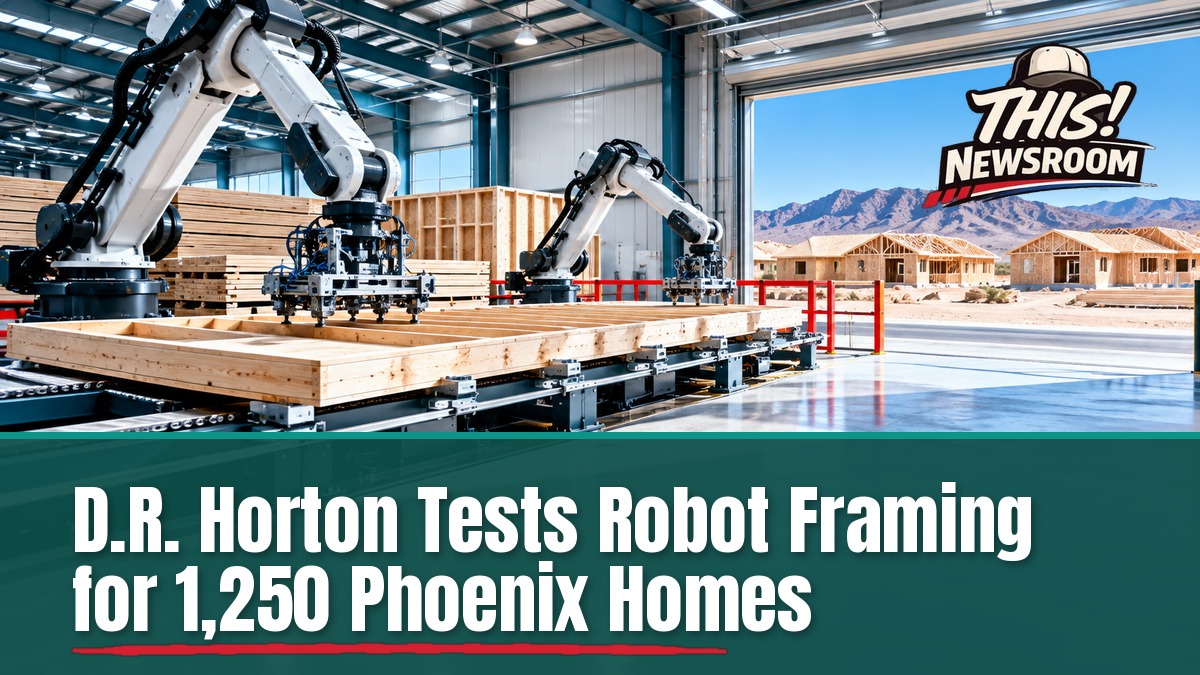
The D.R. Horton robot deal covers about 1.5% of one year’s volume, and it is a pilot, not a revolution. America’s biggest homebuilder signed with Toronto-based Promise Robotics to build the framing for more than 1,250 homes near Phoenix. The announcement came on Oct. 13, so this is not breaking news. Think flat-pack furniture, except robots cut the pieces and the box is a house.
What the D.R. Horton robot deal actually is
First, the wording. Horton did not “hire robots.” Promise owns and runs the factory, the robots and the software. Horton rents the capacity and supplies its existing home designs.
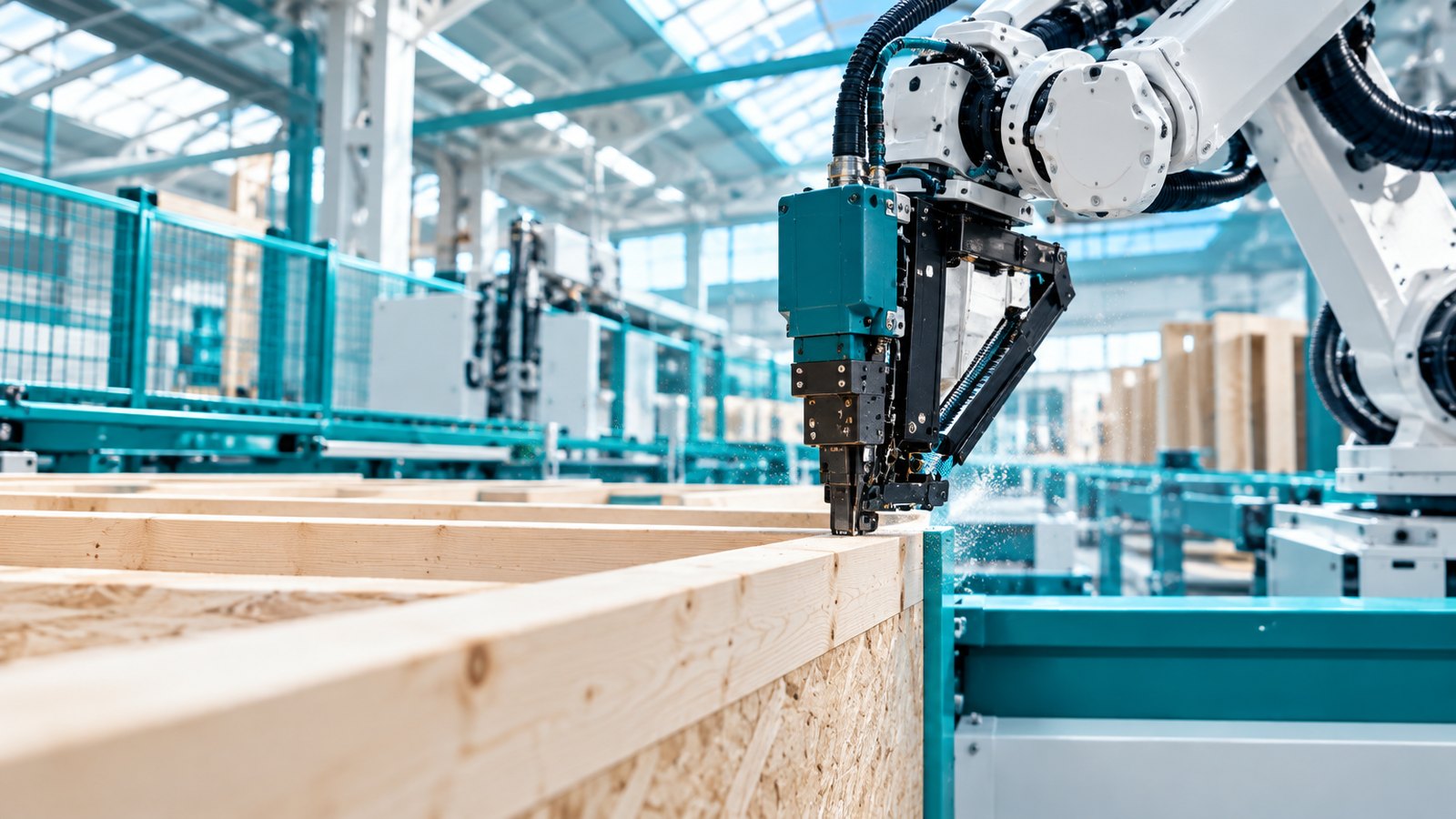
The industry calls this Factory-as-a-Service. Promise carries the capital and the operating risk, while Horton skips the cost of building its own plant. That is a nice trick if you can pull it off.
The robots make walls, floors and stairs as panels inside a factory. Trained crews then assemble those pieces on the lot after they arrive by truck. Horton is the first major U.S. homebuilder to adopt Promise’s system, according to HousingWire.
Robot home framing: walls in hours, not months?
Promise says it can frame a typical 1,800-square-foot home in about eight hours. That is the company’s own claim.
Robot home framing also covers framing components only. Plumbing, electrical, finishing and inspections still happen the old-fashioned way. So no, your house will not appear overnight, whatever the demo videos suggest.
The math on 1,250 homes
Here is the number to keep in mind. Horton closed 84,863 homes in fiscal 2025, so 1,250 homes is about 1.5% of one year’s volume. That figure is a journalist’s calculation, not a company number.
The deal also spans multiple years, so the real share per year is smaller. This Horton Promise Robotics deal is a pilot, not a revolution.
But it is a pilot with a very big player, which is why everyone is paying attention.
Why Horton robotic homebuilding matters if you’re buying a home
Nobody has said what the deal is worth or how much it saves per home. Horton’s stated goals are faster cycle times, more capacity and more predictability. Lower prices are not on that list.

Horton also points to a softening housing market and labor and supply squeezes on its margins. Those pressures show up elsewhere too, as 43% of builders cut prices while confidence sits at a 14-year low.
So what do buyers get first? Probably a closing date that holds, which is a low bar but a real one. Cancellations are a live issue, with buyer walk-aways near record highs in some metros, so reliable delivery matters.
Arizona has a housing deficit above 110,000 units, so any way to build faster gets attention.
What happens next
Production at the new Phoenix factory is expected to start in early 2027. It will be Promise’s first plant in the U.S. The company, founded in 2020, already runs factories in Calgary and Edmonton and has completed more than 200 builds.
Co-founder Ramtin Attar says the goal is “repeatable factories with robotic lines that can process almost any home design.” Promise says it is also talking with other Arizona builders and has started adding HVAC and plumbing systems.
So watch two things in 2027: whether the panels arrive on time, and whether anyone finally puts a dollar figure on the savings. Until then, don’t expect the robots to knock anything off your mortgage.