Four hundred and thirty trees came down in a single day, and then a federal judge hit pause. Judge Ana Reyes has ordered the Trump administration to stop cutting trees at a public D.C. golf course, and the White House says it is closing the course anyway. Here is the fight over the East Potomac golf course, and why it matters to anyone who plays on public land.
On Monday, Oct. 26, U.S. District Judge Ana Reyes issued a 70-page preliminary injunction. It bars the Interior Department, the National Park Service and their contractors from “removing or damaging” trees at East Potomac Golf Links. The ban lasts while the lawsuit moves forward, CBS News reports.
What the judge ordered at the East Potomac golf course
The order is broader than a simple “no chainsaws” rule. It also covers indirect damage. Think excavation, grading or staging equipment parked in a tree’s root zone, according to WUSA9.
It also requires advance written notice before any irreversible change to the East Potomac Park course. Outlets differ on the length: CBS says 10 days, while NBC and WUSA9 say 10 business days. We have not seen the order text, so check the docket before you plan around either number.
Reyes wrote that the plaintiffs are likely to win their claim. In her view, the plans violate the legal requirement for an environmental review. She also found the government’s stated reason for the cutting was a pretext for a larger plan. That plan, per WUSA9, would replace the course with a championship layout designed by Tom Fazio.
The trees that started this
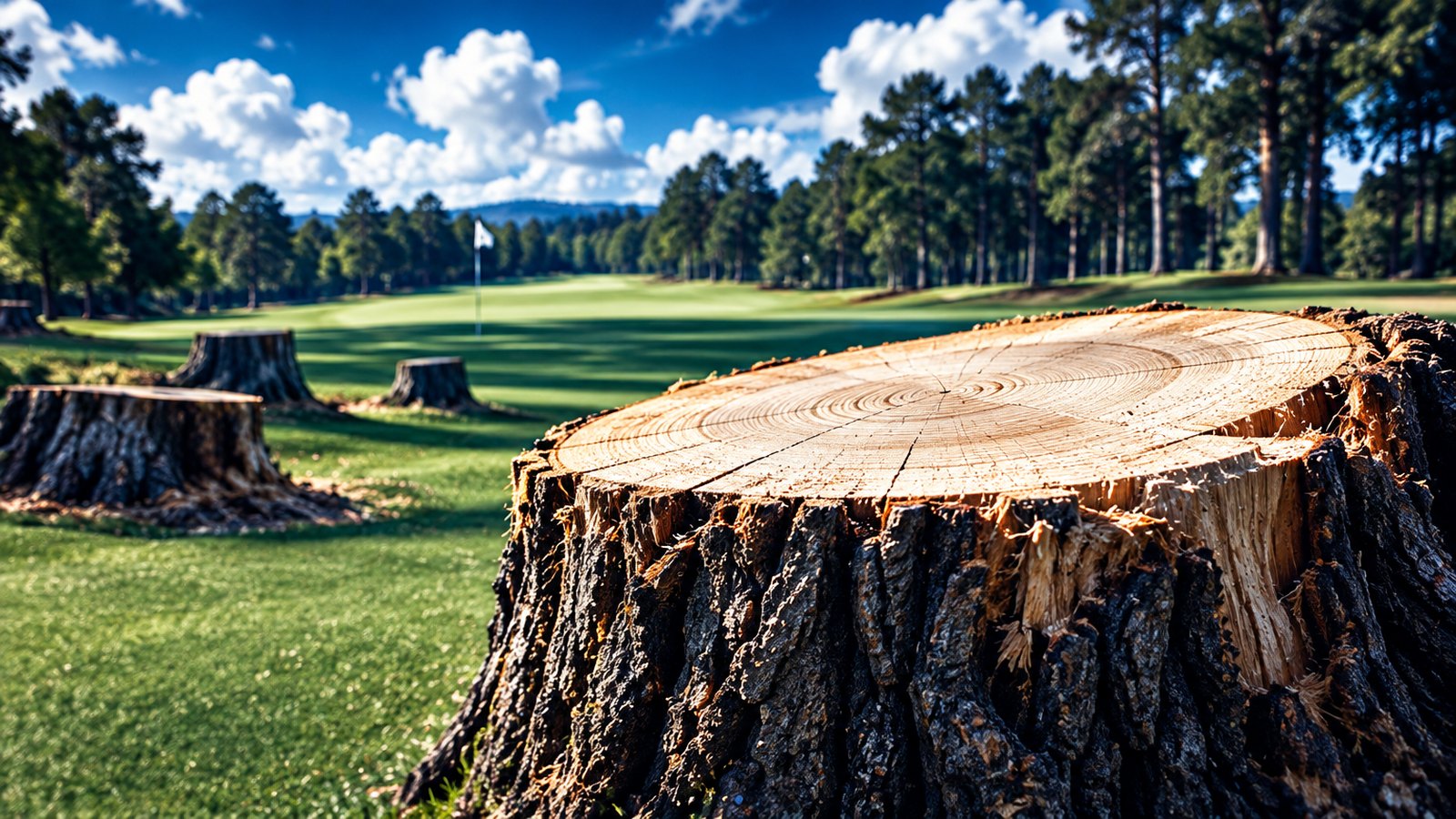
The timeline is the part that sticks. Late on Friday, Oct. 9, the government told the court it planned to remove “up to 529 trees” in phases. Cutting started the next morning. Government lawyers later told the court that 430 trees came down in a single day. The park superintendent said the felled trees had not been identified as hazardous.
Reyes noted that hundreds more would have fallen but for a rain delay. A temporary restraining order followed on Oct. 13 and was extended until the injunction took over.
Her opinion also leaned on the president’s own words. It displayed Truth Social posts, including an Oct. 18 post saying Interior Secretary Doug Burgum and an architect had developed a championship course plan starting in November. The judge said those posts contradicted sworn testimony from government employees, NBC News reports. Two Park Service officials testified under oath that there was no urgency.
Her one-liner is already making the rounds: “The Court still does not speak for the trees.”
Why this D.C. public golf course matters
Here’s the thing: this is a public course. East Potomac was the busiest course in the D.C. area last year, with 124,500 rounds, according to the National Links Trust. It is a municipal course on federal land, so regular people with regular budgets play it. The plaintiffs are a preservation group and two D.C. golfers. They argue a rebuilt championship course would push tee-time prices out of reach for a place meant to be open to all.
The suit followed the administration’s December decision to end the National Links Trust’s lease. That lease covered East Potomac and two other D.C. courses. The park is also on the National Register of Historic Places.
Washington’s public-land fights rarely stay in one lane. The same week, the administration was busy elsewhere, from a 72-hour phone blitz before the midterms to health policy shifts like the new peptide compounding rules.
Trump says the East Potomac Golf Links close Nov. 15
Hours after the ruling, Trump posted that the course will close Nov. 15 “as scheduled.” He called the decision “unconstitutional” and said the administration would appeal. DOJ has since filed a notice of appeal.
A court filing from Wednesday night says the Park Service will close East Potomac Park south of Buckeye Drive on that date. It cites a crumbling seawall as a safety hazard, per WUSA9. That closure covers the whole park area, not only the golf holes.
Government lawyers have also accused Reyes of bias in their filings. She has ordered DOJ back to court. They must say whether a Nov. 15 closure plan exists and how it squares with what the department told her earlier.
What happens next for the East Potomac golf course
Three things to watch. First, DOJ’s answer to Reyes about the closure. We could not confirm a deadline or hearing date. Second, whether the administration asks an appeals court to pause the injunction before Nov. 15. Third, whether the written-notice requirement turns the closure date into a courtroom date.
One point for fairness: the seawall safety claim is the government’s reason. A judge has already found an earlier rationale for the tree cutting to be pretextual. Whether this one holds up is now the question.
So the trees may be safe for now. The course itself is the open question.