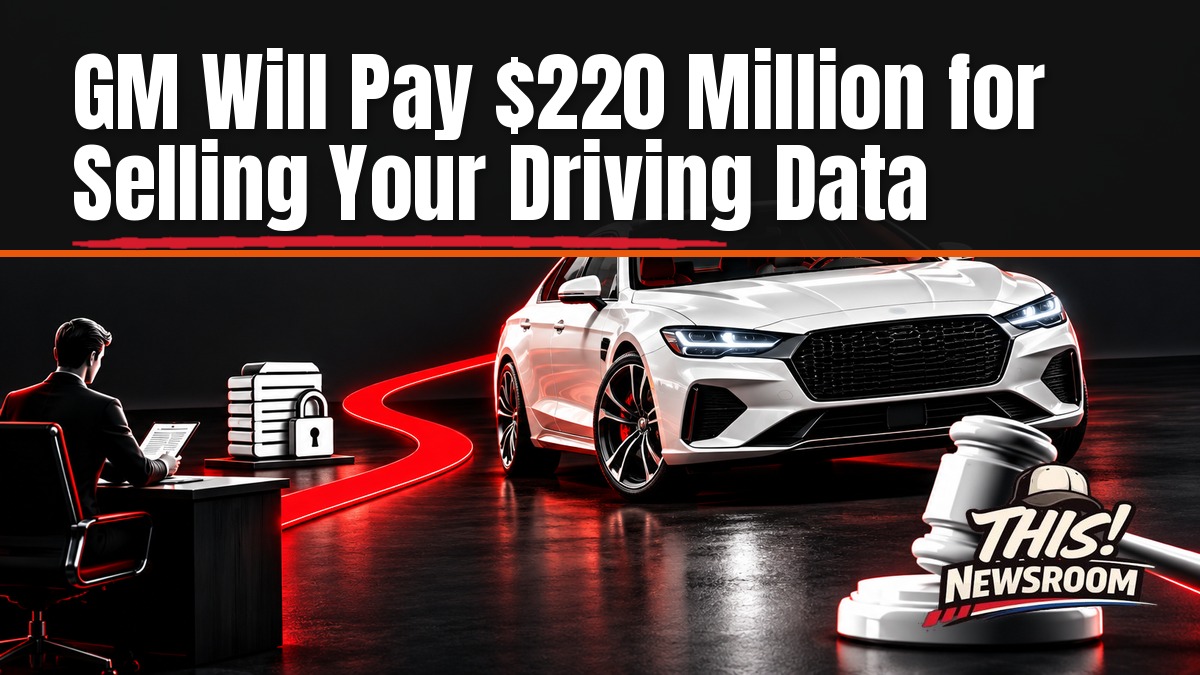
Your car may have been snitching on you, and General Motors just agreed to pay $220 million over it. The GM driver data settlement ends a case brought by 36 attorneys general, who say the automaker sold how people drive and where they go to data brokers that resold it to insurers.
Detroit News reported the deal on Thursday, Oct. 29. Washington and Oregon co-led the bipartisan coalition, Oregon’s Department of Justice says. Headlines call it a fine. However, the state releases call it a settlement of allegations, and nothing I found shows GM admitted wrongdoing. So that is the word I’ll use.

What the states say GM did in the OnStar data settlement
The case centers on OnStar Smart Driver, a feature that scored your driving, basically a report card for your right foot. GM enrolled millions of drivers between 2016 and 2024, WTNH reports. The states say that driving and location data went to brokers.
Those brokers’ contracts specified the data was for insurance products, and as a result insurers could change premiums based on driving habits. Meanwhile, GM did not tell drivers any of this, according to Washington’s attorney general.
It gets stranger. The OnStar app wrongly told more than 370,000 drivers they were not enrolled in Smart Driver. GM later unenrolled them without mentioning the error, and Connecticut’s attorney general says their data stayed with brokers and insurers.
Engadget also reports that GM reportedly gave dealerships bonuses to enroll customers. (Nothing says "trust us" like a sales incentive.)
What the GM data privacy settlement forces GM to change
The money gets the headline. The rules matter more if you drive a GM car. Under the deal, GM must:
- Get affirmative, express consent before collecting or disclosing driving and location data.
- Limit the driving data it collects in the first place.
- Run a comprehensive privacy program with regular internal and external assessments.
- Add dealership oversight and training to stop enrollment without consent.
Those terms come from Maryland’s announcement, Arizona’s and Fingerlakes1’s coverage of the deal. Carmakers across the industry are also reworking their strategies, as our look at who is paying after the EV tax credit died shows.
Here’s the thing: who gets paid in the General Motors driving data deal?
Not the drivers.
The settlement money goes to the states. Yahoo Finance reports the deal sends nothing to the people whose trips were recorded. Washington gets $12.3 million and New York gets $12,054,341, with more than 700,000 New Yorkers enrolled in Smart Driver, VINnews reports. Oregon gets more than $10.4 million, Michigan about $7.2 million, Maryland $7.33 million, Connecticut more than $6 million and Arizona $5.9 million.
Connecticut Attorney General William Tong put the stakes in blunt terms. Insurers, he said, are using that information “to jack up insurance rates, on all of you and all of us,” WSHU reports. New York Attorney General Letitia James said no one should worry about a car company “tracking their every move.”
GM’s side, and the bigger picture
GM says the deal covers a product it already killed. “This agreement addresses Smart Driver, a product we ended in 2024,” a spokesperson said, per WTNH. GM dropped the program in 2024 after New York Times reporting that cited a driver whose insurance payment rose 21%.
This isn’t GM’s first bill. In May it agreed to pay $12.75 million to settle a California investigation into driver-data sales. In January the FTC finalized a 20-year order that carries no money but bars GM from giving driving data to consumer reporting agencies for five years.
Meanwhile, the rest of the auto world keeps moving, and Rivian’s climb to No. 2 in US EVs shows how fast the competition shifts.
Outlets disagree on how to count the coalition. Some say 36 attorneys general, others 35 states plus D.C. Likely the same group. One date I could not confirm is when GM has to pay.
So the next time your car offers a free driving score, ask who else is getting a copy. The price might be your premium.