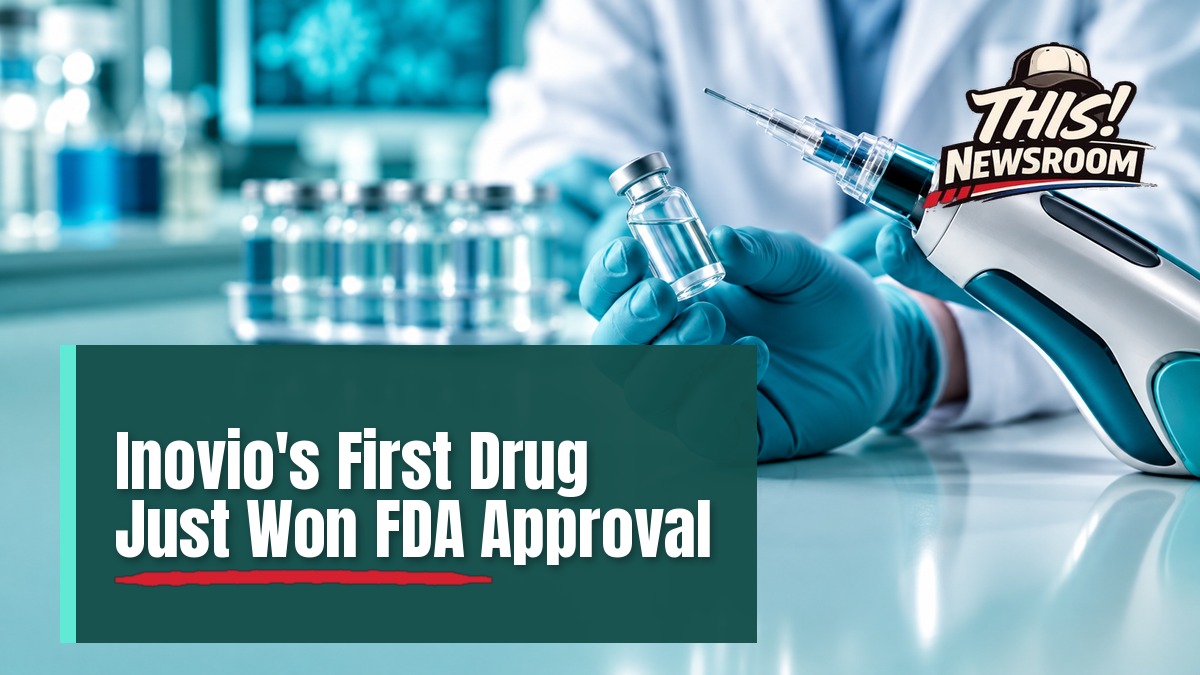
Some people with a rare throat disease need surgery again and again just to keep breathing and speaking. The FDA just approved Inovio Voceryq, a DNA-based treatment for that disease, and the company’s stock more than tripled after the closing bell.
The FDA gave the drug, also known as INO-3107, accelerated approval on Friday, according to Reuters. It is the first product Inovio has ever brought to market, a big moment for a company that has spent years in the biotech wilderness. Here is what the approval means, and what it doesn’t.
What Inovio Voceryq treats
The condition is called recurrent respiratory papillomatosis, or RRP. It is a rare, chronic disease caused mainly by HPV infection. Benign tumors keep growing in the airway, so patients often need repeat surgery to breathe and speak normally.
Voceryq is cleared to reduce how often adults with RRP need those surgeries, per Inovio’s announcement. The label also pairs the drug with a delivery device called CELLECTRA 5PSP. RTTNews calls this Inovio RRP treatment the first FDA-approved option specifically indicated to cut surgery frequency in adults with the disease.
Here’s the thing: for patients, fewer operations is the whole point, because every operation carries a risk of injury to the larynx. “The approval of VOCERYQ is an important step in improving the quality of life for RRP patients as every surgery carries the risk of laryngeal injury,” said Simon Best, a Johns Hopkins otolaryngologist who led Inovio’s study, as quoted by HCPLive.
The fine print on the INO-3107 data
This is an accelerated approval, which means the FDA is relying on an early signal instead of final proof. That signal was no surgery for 12 months after treatment. In the efficacy group, 7 of 26 patients, or 27%, hit that mark.
That is a small group, and the trial had no control arm. So nobody can say yet how many of those patients would have gone a year without surgery anyway. That is why the drug now owes the FDA a confirmatory study. The FDA is also in the middle of other regulatory shake-ups, like its first baby formula rewrite in decades.
Inovio says it plans to send the agency a draft protocol for that study by the end of 2026, and expects to finalize it by mid-2027, per HCPLive. The approval comes with a clear to-do list.
The stock story, and why to be careful
Wall Street noticed. Reuters reported shares up 215% in extended trading. RTTNews put the jump near 242%, while Seeking Alpha said about 280%. Those are different outlets with different snapshots of a stock moving fast in thin after-hours trading.
Remember where it started, too. RTTNews says the shares closed the regular session down about 22% at roughly 60 cents. A triple on a sub-dollar stock is a dramatic headline, not a verdict. The real test is Monday’s regular session.
Why this Inovio FDA approval is a surprise
This one wasn’t a lock. According to an SEC filing from December, the FDA’s file-acceptance letter flagged a preliminary view that Inovio had not shown it qualified for accelerated approval. The company said it would not switch to the traditional route. Ten months later, it got the accelerated nod anyway.
The FDA made the call on its target date of October 30. The drug also carries Orphan Drug and Breakthrough designations.
What happens next for Voceryq
Don’t expect it at your pharmacy next week. Inovio says ordering and shipping should begin about 60 days after approval, and it plans full commercial rollout for the first quarter of 2027. The company has not disclosed a price. How the cost lands will matter, especially as regulators loosen rules elsewhere, as in the new HHS policy on compounded peptides.
One more caveat: some financial outlets are calling Voceryq the first plasmid DNA-based immunotherapy approved in the US. We could not confirm that with the FDA, so treat it as a claim, not a fact.
For patients who have lived with rounds of throat surgery, a first-of-its-kind option is real news. The question now is whether it holds up in a proper confirmatory trial.