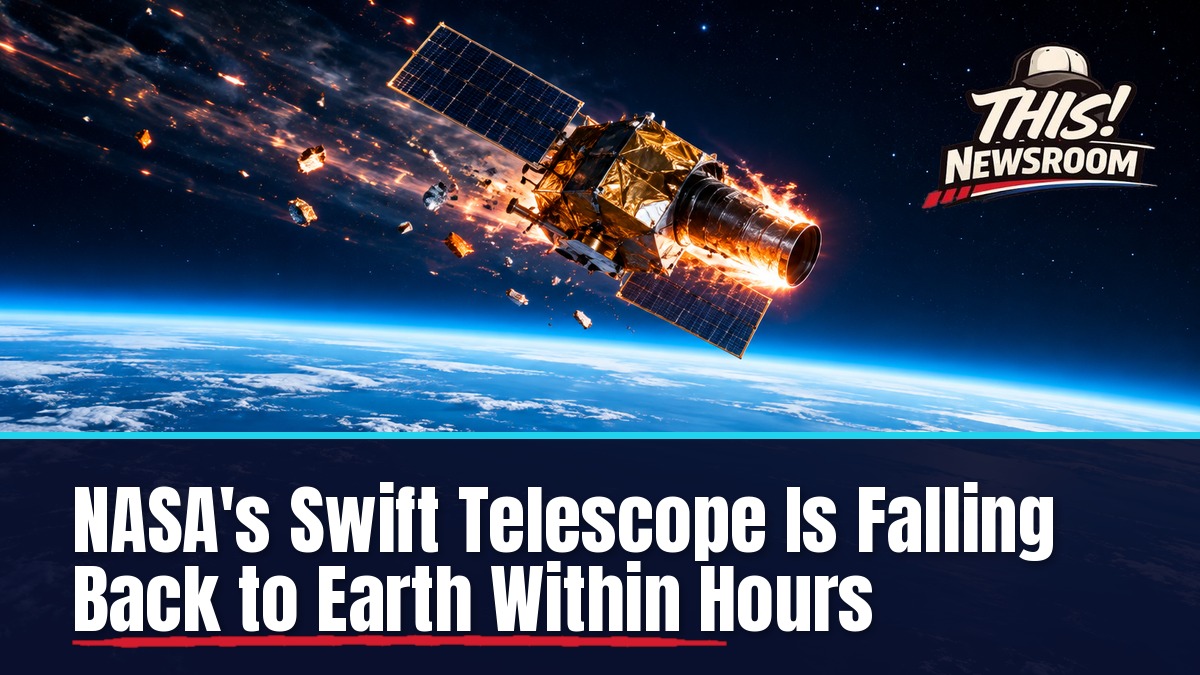
Imagine a gadget with a two-year plan that keeps running for nearly 22. Now imagine it’s a 3,200-pound NASA telescope, and it’s about to fall out of the sky. The Swift telescope re-entry is predicted for early Wednesday, Nov. 4, and the U.S. Space Force says the timing could swing by 11 hours either way.
Here’s the thing: for you, it almost certainly means nothing. NASA puts the risk of harm to anyone on Earth at about 1 in 2,100, and that is for the entire planet, not for each person. The contiguous U.S. and Europe also sit outside the zone where pieces can land, so this is not a mainland problem.
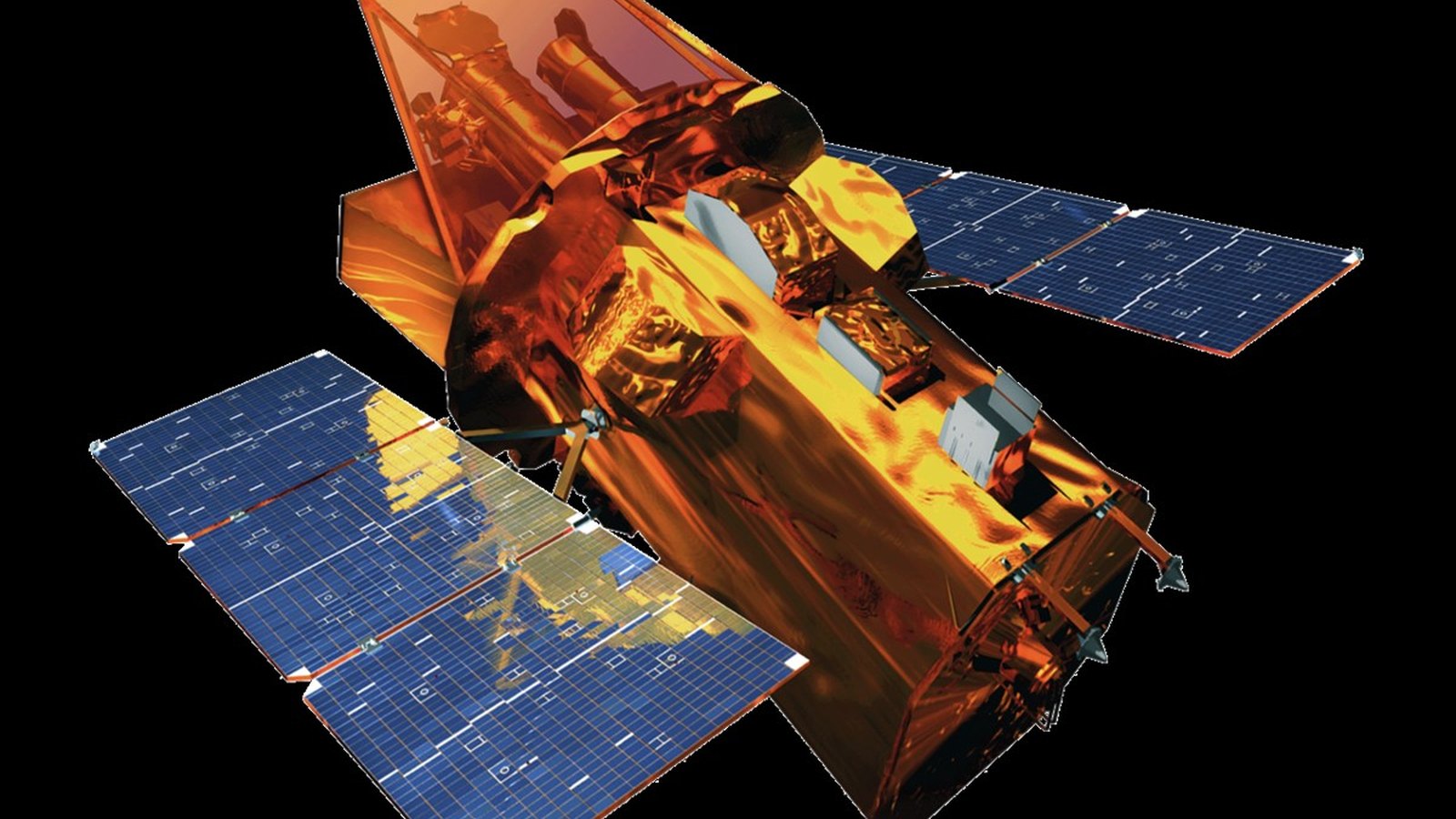
When and where the Swift telescope re-entry is expected
As of Monday, the Space Force predicted re-entry at about 3:30 a.m. EST on Nov. 4, give or take 11 hours. The independent Aerospace Corporation, a nonprofit, is a bit later, at 5:12 a.m. EST, give or take 8 hours, according to Live Science. Do the math on the Space Force window and the end could come anywhere from Tuesday evening to Wednesday afternoon.
Surviving fragments can only land between 20.6 degrees south and 20.6 degrees north latitude. That band covers parts of Africa, Australia, India, Southeast Asia, and Central and South America, but most wreckage will likely splash into the ocean.
The number to repeat at dinner
Swift will hit the atmosphere at roughly 17,000 mph. That is fast enough to cross the entire United States in about 10 minutes (try getting that out of a airport security line).
Most of the spacecraft will burn up, but NASA expects some components to survive. Mission chief scientist Brad Cenko says dense tungsten parts and some mirror pieces are the likeliest to make it down.
Don’t expect a fireball show, either. The re-entry is uncontrolled, the timing is fuzzy, and the track runs mostly over open water, so few people will see anything at all. Swift falling back to Earth will likely be a quiet affair.
How a 2-year mission lasted 22 years
Swift launched in November 2004 with a two-year primary mission. Instead, it kept going for more than ten times as long, according to Spaceflight Now. Along the way it caught more than 2,000 gamma-ray bursts, the most powerful explosions in the universe.
It was also a first responder. When Swift spotted a burst, it could alert bigger telescopes like Hubble and Webb to swing around and look.
NASA’s astrophysics director, Shawn Domagal-Goldman, says Swift “delivered an incredible, lasting return on investment for the nation.” That long run makes the Swift crash to Earth feel like the end of an era.
The rescue that failed before the Swift observatory re-entry
Swift’s orbit had been decaying, so NASA backed a private rescue. Katalyst Space built the LINK robotic spacecraft to dock with the telescope and boost it higher. Headlines put the price tag near $30 million, though I couldn’t confirm that figure in NASA’s own statements.
LINK ran into attitude-control problems and the attempt failed. We covered the moment the rescue robot began tumbling in orbit, and NASA ended Swift’s science mission in late October.
So who watches for the universe’s biggest blasts now? NASA says it will use current missions to fill the gap. That’s a polite way of saying the sky just lost one of its best alarm bells.
What happens next as Swift falls back to Earth
NASA and the Space Force will keep updating the prediction as Swift drops. Experts say that once a spacecraft falls to about 75 miles up, the end usually comes within minutes.
Watch NASA’s Swift blog for confirmation, and for any word on debris. So far, no one has reported finding a single piece.
Swift is the first of the big telescopes to go. Hubble is expected to follow in the 2030s, which means we all just got an early rehearsal. If you like your science with a side of wild tech, check out our look at TIME’s Best Inventions list and the home robot you can pre-order.