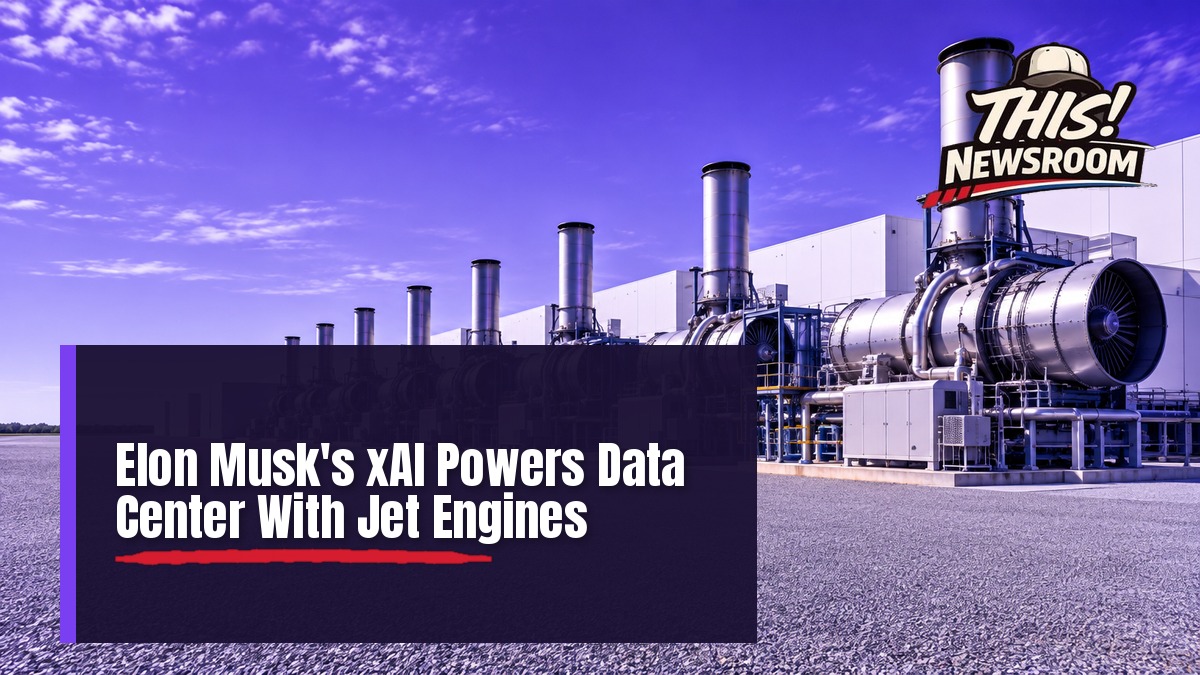
Eight converted jet engines now help power Elon Musk’s xAI data center in Mississippi, and the permits behind them allow a 25 percent higher limit for smog-forming pollutants. That is the xAI jet engine data center story, and the legal fight over it is still unresolved.
Tom’s Hardware reports that xAI has installed eight converted jet-engine turbines. A summary from AI Weekly says state permits and satellite imagery reviewed by the New York Times back that up.
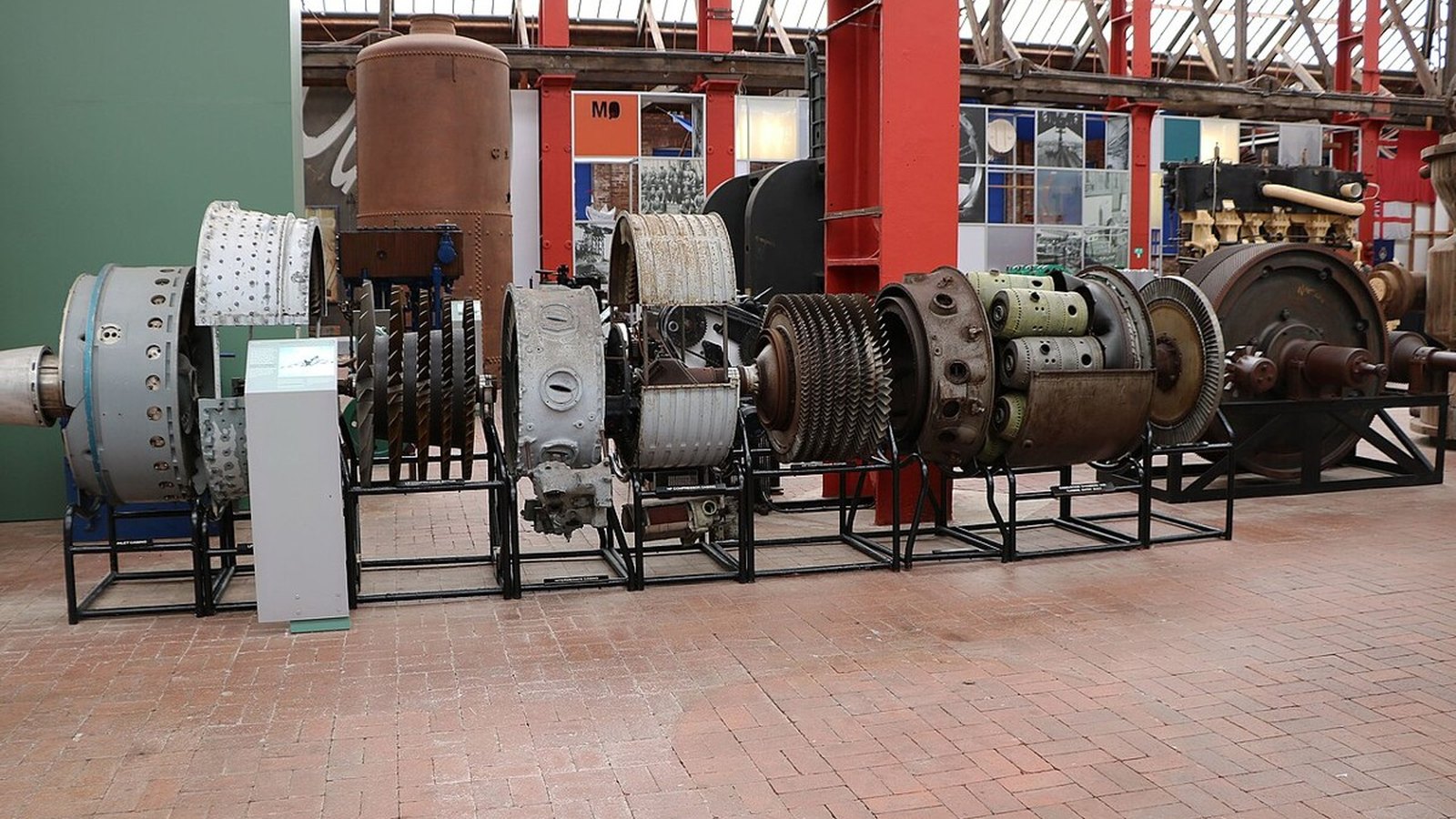
ProEnergy, a Missouri company, converts the generators. It repurposes unused General Electric turbines of the type found on Boeing airplanes. A machine designed to get you to Denver by lunch is now doing overtime for an AI model.
The reason is simple. AI data centers want more electricity than local utilities can deliver on a data-center timeline. A turbine you can bolt down this quarter beats a grid hookup that arrives in three years. That same hunger for power drives bigger bets elsewhere, such as the reported $6.3 billion Osaka data center Anthropic is eyeing.
What the permits allow at the jet-engine-powered data center
Here’s the thing that matters for the neighbors. Per Tom’s Hardware, the permits allow a 25 percent higher limit for volatile organic compounds. Those chemicals help form smog, and smog is not something you want to be on the receiving end of.
AI Weekly’s summary of the Times report adds a second figure. It says Mississippi lets these turbines emit carbon monoxide at twice the rate of the other turbines at the site. However, that figure appears in only one of the two summaries we reviewed. Treat it with care until someone checks the permit itself.
The Southern Environmental Law Center is challenging the state’s approval. Its argument is that xAI has not shown the turbines meet emissions standards for pollutants including formaldehyde. We found no direct quotes from SELC, xAI or state officials. Likewise, xAI, the Mississippi Department of Environmental Quality and ProEnergy have not responded.
A bigger fight over xAI’s Mississippi turbines
The jet engines sit inside a bigger dispute near Southaven, Mississippi. The Mississippi Free Press reports that an xAI affiliate, MZX Tech, has applied to the state for a permit. It covers 41 permanent gas turbines at its Southaven plant, meant to supply xAI’s Colossus 2 project.
Meanwhile, the state let xAI run its existing Southaven turbines without permits. It cited a federal exemption for temporary, mobile engines that lasts up to a year.
In April, the NAACP, represented by SELC, sued xAI in federal court in northern Mississippi. Mississippi Today reported that the suit alleges the Southaven turbines run without an air permit, which would violate the Clean Air Act.
Regulators are not the only ones pressing AI companies on safety, either. Texas recently accused OpenAI of selling ChatGPT as safe when it wasn’t, as we covered in Paxton vs. Altman.
Why this matters beyond Mississippi
You don’t have to live near Southaven to care. Every AI company is racing to find power faster than the grid can supply it. If Mississippi’s approach holds, other states could copy it. Converted jet engines with looser pollution limits could become a standard way to feed new data centers.
That would shape air quality well beyond one county. Smog and carbon monoxide do not stop at a property line. Local air standards also vary by state, so a precedent set here gives other developers a template to point to when they ask for the same treatment.
What happens next with xAI Colossus power
Three things are still open, and none has a date we could find. First, how Mississippi resolves SELC’s challenge to the turbine approvals. Second, the state’s decision on the pending 41-turbine permit. Third, the status of the NAACP lawsuit, where we found no ruling or schedule.
One question is still unanswered. Does the higher VOC ceiling reflect a limit of the converted engines, or simply a choice the state made when writing the permit? AI Weekly calls the state’s response to SELC an early test of how regulators treat jet-engine generators at data centers. If that holds up, expect the playbook to travel. Whoever wins, the xAI jet engine data center will set the template.
So who gets the clean air in the AI race? For now, regulators are deciding the answer one permit at a time.