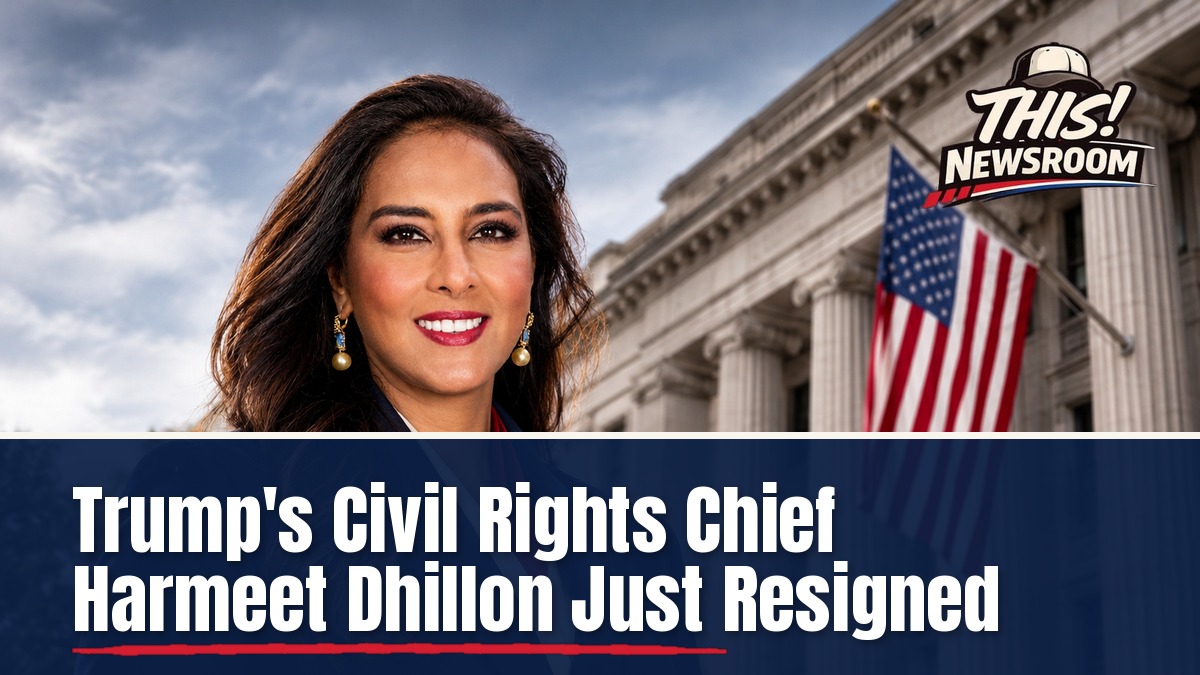
More than 75% of the Civil Rights Division’s staff was fired or quit on Harmeet Dhillon’s watch. Now she is gone too. Harmeet Dhillon resigns Thursday as the Justice Department’s top civil rights lawyer, the first senior DOJ official to walk out since Democrats swept the midterms.
Attorney General Todd Blanche said on X that he accepted the resignation of the Assistant Attorney General. She “led the Civil Rights Division with conviction the past 18 months,” he wrote, according to CBS News. CNN and Bloomberg Law both report she is the first senior administration or DOJ official to leave since the election.
Why the Dhillon resignation matters beyond Washington
This isn’t just another personnel note. The Civil Rights Division enforces the federal laws behind voting access, police conduct, workplace discrimination and religious freedom. Whoever runs it decides which of those cases get brought and which quietly disappear. That matters even more now, because the DOJ is already in election fights like the ballot warrant fight between Newsom and Trump’s DOJ.
Under Dhillon, the division changed direction fast. Fox News lists her priorities this way: DEI and race-conscious policies, religious discrimination, and transgender participation in women’s sports. It adds Second Amendment rights and election integrity. The division also built a new Second Amendment section and pressed states over their voter rolls. It sued UCLA and Harvard over alleged antisemitic environments, according to Newsweek and Yahoo News.
Her supporters say she scrubbed out a bloated, politicized bureaucracy. Her critics, however, say she gutted it. OPB reports the division dropped investigations into police departments. It also withdrew from dozens of cases on voting rights, racial discrimination and more.
The staffing numbers as the DOJ civil rights chief quits
The people numbers are stark. CNN and CBS say more than 75% of the division’s staff was fired or quit. NPR and OPB put the number of departed attorneys at roughly 300. Those are different measures, so treat them as two views of the same exodus rather than one number.
Even some conservatives had complaints. CNN reports that some on the right grumbled that inexperienced lawyers couldn’t handle the cases referred to the division. One GOP official working on election cases reportedly asked, “Where’s Harmeet?”
Stacey Young, a former division attorney, was blunt. She now runs the DOJ alumni group Justice Connection. She called Dhillon “the most destructive, lawless, and hateful head of the Civil Rights Division in DOJ history.” Blanche, meanwhile, said she “defended the civil liberties of every American and enforced the law without fear or favor.”
Was it the midterms or the plan all along?
The timing invites the obvious question. According to Fox News, Dhillon said she decided to leave weeks before the Republican losses. She also said White House chief of staff Susie Wiles asked her to wait until after the election. Bloomberg Law, citing four people familiar, says she told allies she would leave after the midterms.
The catch: the Wiles detail comes only from Dhillon herself, and only Fox has it. It is unverified. Others frame the exit as a reaction to the GOP’s rough night, a theme that runs through coverage of Vance blaming the Iran war for the midterm loss.
Dhillon is heading back to private practice, per Fox. That means the civil rights, free speech and election law work she did before government. Her Senate confirmation came in April 2025.
What happens after Dhillon exits the Justice Department
No successor or acting head had been named in the reports we reviewed. A permanent pick would need Senate confirmation, and a new Congress could change the math. That alone could make the next nominee a harder lift.
The bigger questions are about the cases. What happens to the state voter-roll suits, the university lawsuits and the investigations still open? Courts are already pushing back on some election moves, as in the Supreme Court’s rejection of the bid to sideline California mail ballots. Bloomberg Law also notes she is the second Senate-confirmed DOJ official to depart in recent weeks. Patrick Davis left the Office of Legislative Affairs last month.
Who gets the keys to the division, and which of her cases are still standing when they do?