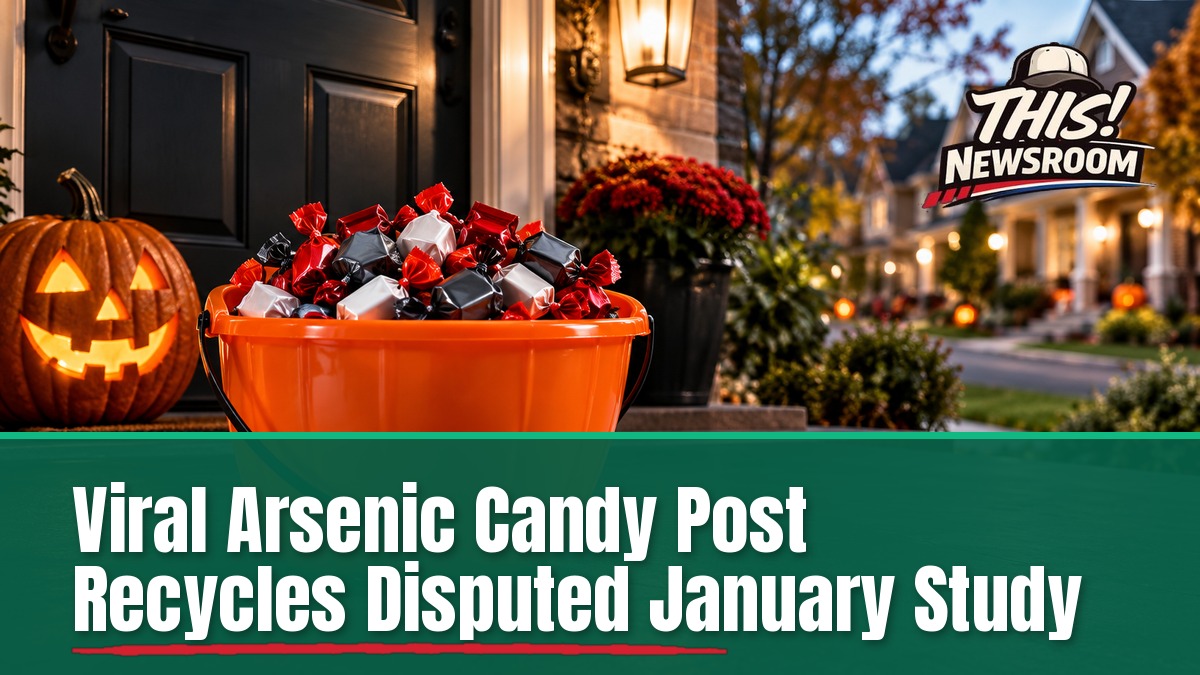
Scrolling past a post that says it is “now confirmed” your kids’ Halloween candy contains arsenic? Check the date first. The testing is from January, not this week, and the post is recycling Florida’s candy results. The Halloween candy arsenic story is more complicated than the caption makes it sound.
What Florida candy testing actually found
Gov. Ron DeSantis, First Lady Casey DeSantis and Surgeon General Dr. Joseph Ladapo announced the results on January 26 under the Healthy Florida First initiative. The state Department of Health tested 46 candy products from 10 companies for heavy metals. Arsenic turned up in 28 of them, or about 61%.

One wrinkle: the Florida Phoenix headline said 80%, but its own text said more than 60%. The 28-of-46 math is the number to trust.
The first lady said none of the candies showed elevated lead, mercury or cadmium. Many products came back clean. According to FoodNavigator, the arsenic findings were mostly in sugar-based and fruit-flavored candies.
Per Outside Online and other coverage, reported levels for named products included 500 parts per billion for Nerds Gummy Clusters. Original SweeTarts came in at 400, and original Tootsie Roll at 380. No recalls were issued.
Here’s the thing: “tested positive” is not “dangerous”
Arsenic occurs naturally, and Ladapo himself said it is in all foods, usually at low concentrations. So “detected” is the start of the question, not the answer.
Florida measured the candy against its own health-based benchmark. That benchmark rests on hypothetical monthly and annual intake, with children as the yardstick. Casey DeSantis put the concern this way: it is about candy eaten “repeatedly over time,” so exposure can exceed what the department considers a safe allotment. That is a different claim from “one fun-size bar will hurt your kid tonight.”
The FDA, meanwhile, sets no safe arsenic level for most foods, candy included. Most people know only one hard federal number, the 10 ppb cap for drinking water. That is a very different product, eaten in very different amounts.
The pushback on arsenic in candy
The National Confectioners Association called the state’s conclusions “misguided.” It says FDA data show much lower arsenic in confectionery. It also says Florida’s testing technique differs from the FDA’s, which could cause “unnecessary consumer confusion,” as Fox News reported.
The study has also not been peer-reviewed, and the health department’s own release indicated the findings are not definitive. FoodNavigator said the department did not answer its questions about testing methods by press time.
So “confirmed” is a stretch. “Reported by the state, disputed by industry” is closer to the truth.
What the viral post gets wrong
Three things I could not verify. First, that every brand in the viral list was among the 28; I did not check the brand-by-brand table against the post. Second, the line that “tens of millions of children” are eating this candy tonight, which is a guess dressed up as a number. Third, the dramatic claim that wrappers hide something. In fact, there is no label rule for arsenic in candy, because there is no federal limit to label against.
I found no new testing, recall or FDA action tied to Halloween 2026. Instead, the story has simply resurfaced in holiday coverage and on social media, including a Halloween roundup in the Marco Eagle on October 20. The scare also lands in a rough year for the sweet stuff, since Halloween chocolate sales have already fallen.
Halloween candy safety: what do you do with the bowl?
Keep it in perspective. Arsenic is a known carcinogen over long-term exposure, so the worry is about habits, not one night of trick-or-treating. If it bothers you, treat it like sugar: moderate the pile and skip the daily dessert routine.
For more on surviving the night, see our Halloween parenting tips for candy chaos. Organic options such as Black Forest Organic Gummy Bears and Annie’s Organic Bunny Fruit Snacks showed no detectable arsenic in the Florida testing.
The bigger lesson is older than this scare: before you share a scary post, check the date. Nine months ago is not “tonight.” Halloween candy arsenic headlines work the same way, so read past the caption. Even the White House candy giveaway drew more attention than this old data did.